India (INR)
Diamonds, while effortlessly beautiful, are complex. It can be difficult for the untrained eye to fully understand what makes them so intriguing. As unique as snowflakes, diamonds are never completely identical – something that adds to their beauty and value. And one thing that makes each stone unique is the cuts of diamonds.
Together, there are a number of different factors that separate each diamond. You may have heard about the 4Cs of diamonds — cut, clarity, color, and carat — which determine nearly everything about the diamond. These categories define each stone’s uniqueness by identifying and measuring certain characteristics.
While all of the 4Cs are important in their own ways, the cut of a diamond is often considered the most critical aspect from a visual standpoint. Keep in mind, the shine, glimmer, and glow of the stone all depend on the cut.
If diamonds fascinate you, or if you’re about to buy an engagement or wedding ring, you’ll want to know why diamond cuts matter.
Most people might think that the word ‘cut’, when associated with diamonds, begins and ends with the shape of the stone.
While the two terms are sometimes used in the same context, there’s a considerable difference between diamond shapes and cuts. ‘Shape‘ refers to the base form of the diamond. The full meaning of the term ‘cut’ goes way beyond that.
Shape is easy to identify and have a preference on. But, cut is also important because it determines how many angles and facets will appear on the gem, as well as how shiny and sparkly it will appear. Also, a good cut will also make it difficult to notice blemishes and inclusions in the raw diamond.
However, because they are so closely linked, it is important to understand diamond shapes when talking about diamond cuts.
A diamond can essentially be any shape. But, there are 12 popular diamond shapes that make up the vast majority of the stones on the market.
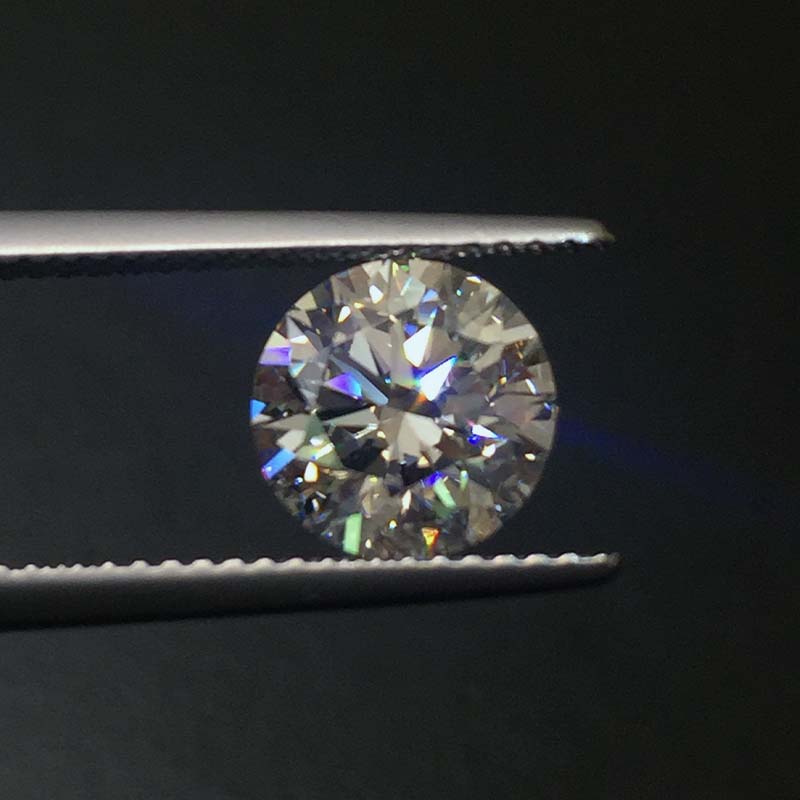
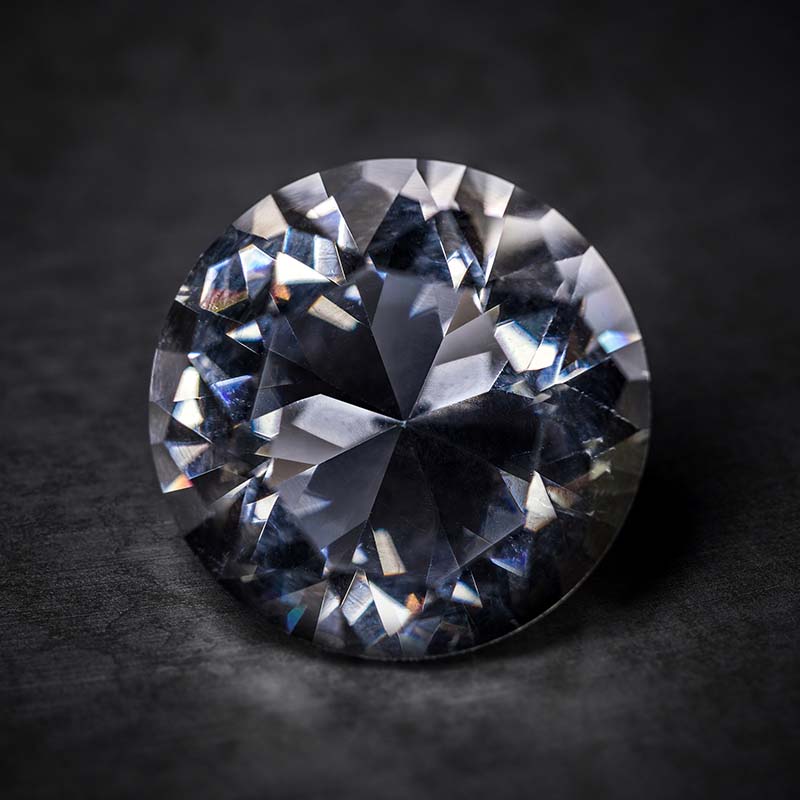
The round brilliant is arguably the most popular cut of all— with two out of every three diamonds being this shape. Round brilliant is the shape you think of when you think of diamonds. This iconic shape is almost universally the sign for a diamond.
Designed in square or rectangular shape, emerald cut diamonds are highly reflective due to their lengthy, straight facets.
Usually of a square shape, the princess cut usually exude much more light and color. This is due to the quantity and configuration of its facets. The princess cut is second in popularity after round brilliant cut diamonds.
One of the most fancy diamond shapes, diamond aficionados hold the Asscher in high regard. With a square face and angled sides, the Asscher cut takes on an octagon shape. These additional angles create a very flashy stone.
Similarly to pillow cushions, cushion cut diamonds are essentially square, but with cut corners. This style is often considered vintage or classic, and offers dazzling fire.
Oval diamonds are often chosen because of how they appear larger than they are. They also give the illusion of lengthening the finger. With a larger surface, this cut takes in a lot of light and gives back optimal sparkle.
A pear shaped diamond is much like an oval diamond, but with one pointed end. It is a modified brilliant cut, meaning it aims to maximize brilliance. The very recognizable shape is difficult to craft, as they require great symmetry.
Heart shaped diamonds are a clear nod to love and romance. Like the pear, the crafting of a heart shaped diamond must be extremely accurate. Evenly cut facets are important to maintain symmetry.
A blend of the round brilliant and emerald cuts, radiant diamonds offer an intense brilliance. They feature square and rectangular facets, as well as cut corners that work together to create a modern look.
Trillion diamonds are triangular and the number of facets it has can vary. As with other cuts, symmetry is very important for a radiant show of fire. This cut is not very common, as setting them can be a challenge.
The long, rectangular baguette cut is a simple yet stunning look. This shape is typically used for accent stones rather than the centerpiece.
The marquise is a unique cut, elongated and elliptical with pointed tips. Like the oval cut, it gives the illusion of being larger than it actually is.
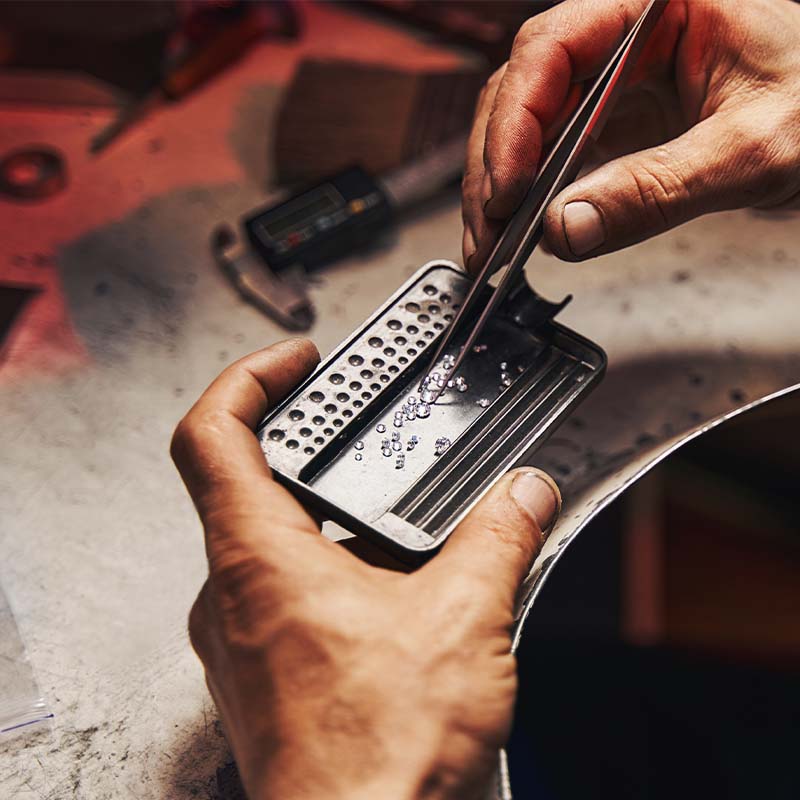
Diamond shapes come in different styles, and their properties can change drastically. This is where the cut makes a difference. Cutting is what turns a rough diamond into a shaped, polished, refined, dazzling gem. You can have two diamonds that are the exact same shape, but are very different because of their cut.
Traditionally, the process of cutting not only gives the diamond its base shape, but customizes that shape to determine its dimensions (including length to width ratio and depth), facets, brilliance, fire, and scintillation.
A rough diamond begins its life as a shaped gem with a hefty dose of planning. Much thought goes into cutting each and every diamond, as any professional will want to preserve as much of the original stone as possible during the cutting process.
The diamond is then put through the processes of sawing, cleaving, bruting, and lasering. Here it is not only fashioned into the base shape intended, but also given the numerous facets that will eventually give it its starry shine.
Lastly, a thorough inspection and careful polishing sees the stone fine tuned into an awe-inspiring piece of craftsmanship.
To better appreciate the beauty of diamonds, you’ll need to understand a few terms. These terms refer to factors to take into consideration when buying a diamond:
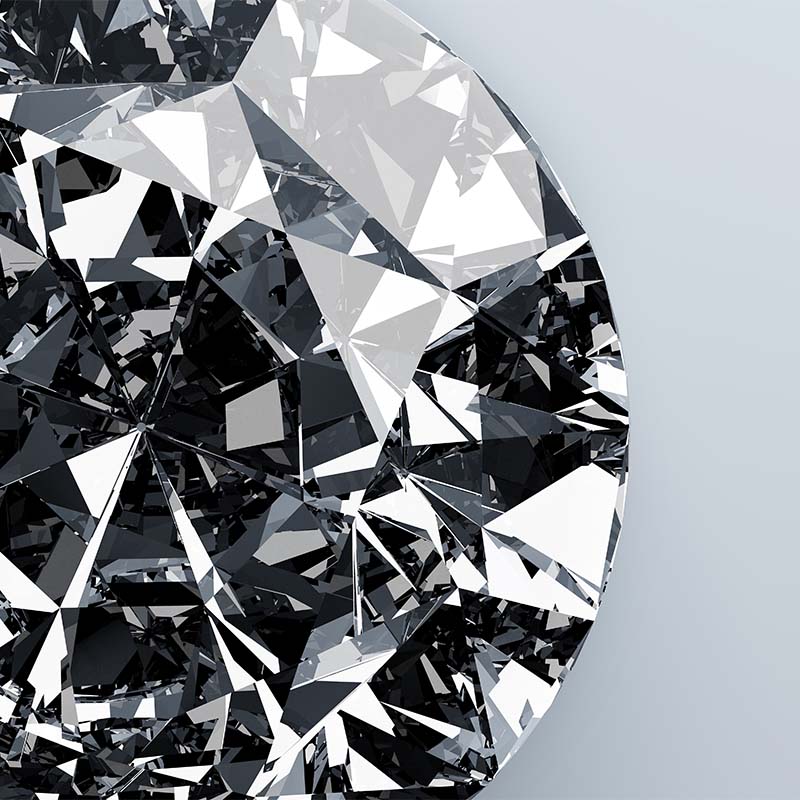
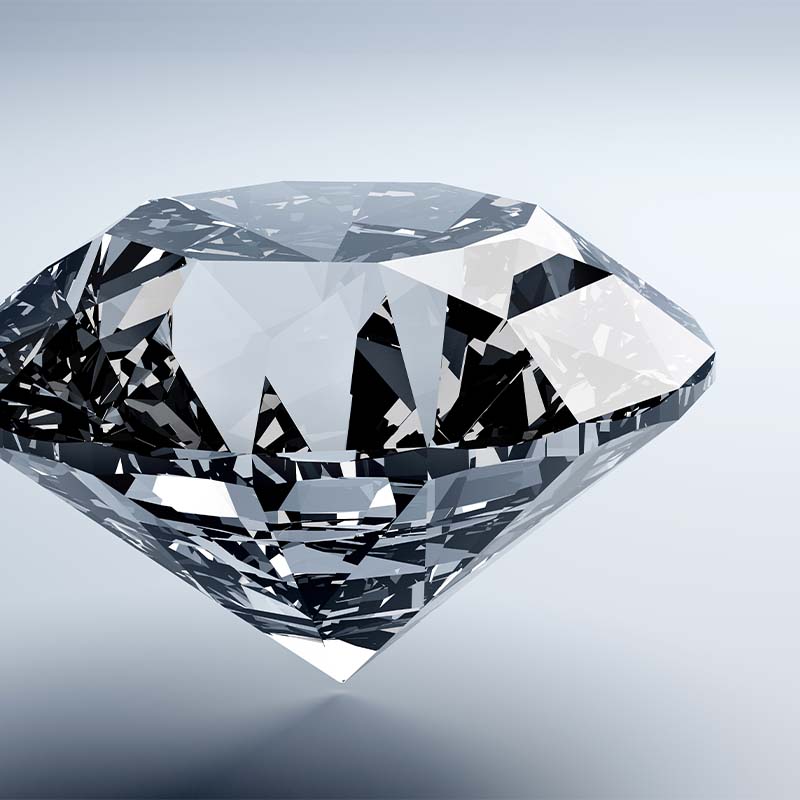
The facets of a diamond are the straight surfaces on or inside a diamond. Cut and polished facets create flat, shiny surfaces. These surfaces or faces reflect light to give a diamond its glimmer, glitter, and shine.
Facets are everywhere on a diamond, placed symmetrically so they can reflect light off of each other. Their size matters as much as their positioning and angles, as increased surface area translates to more light reflection.
In fact, there are two kinds of facets you need to know about – physical and virtual. A physical facet refers to the physical cuts or surfaces. Alternatively, a virtual facet is when the physical facets bounce light to create multiple reflections. This results in an effect like a house of mirrors at a carnival.
Reflections of light create a brilliance that grows with the number of facets and cut surfaces. Without facets cut into them, most diamonds would just look dull and oddly-shaped, rather than majestic, regal gems.
Geometrical facets are also why all popular diamond shapes—whether it’s the round brilliant, the Asscher, or even the remarkable trillion—have a sense of symmetry to them.
The brilliance of a stone refers to the ability of its facets to reflect light. Ultimately, the nature of the cut determines how brilliant each diamond is.
Brilliance isn’t directly correlated to the brightness of the light reflected, however, but rather an aesthetically pleasing balance between contrast and brightness.
This means that parts of the diamond must remain dark while others light up. Otherwise, the ‘brilliance’ would just be flat light and not the interplay of light and shadow that makes it remarkable.
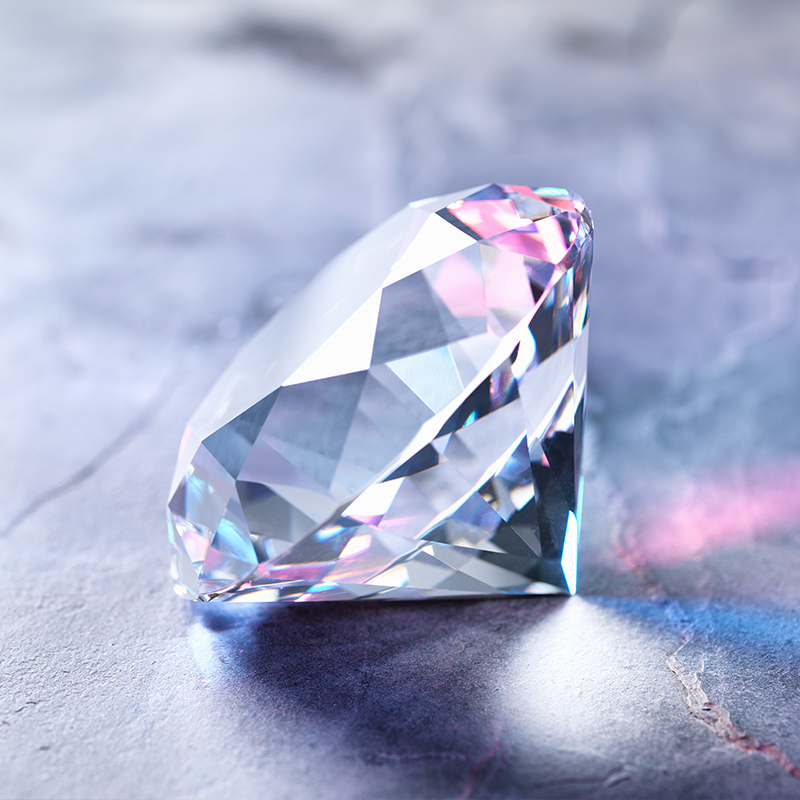
The diamond’s fire is its ability to produce flashes of color when exposed to light. One of the most enchanting aspects of the gem, the collection of prisms within the diamond create fire. These prisms refract white light into the colors of the rainbow.
Like brilliance, the fire of a diamond is directly related to the cut. The more precise a diamond’s facets cut and polish are, the more fire it will display.
Scintillation refers to flashes and sparkles that appear on the surface of the diamond as light moves over it. It is a combination of brilliance and fire, and simply adds to the beauty of this marvelous gem.
Even after the cutting process, a rough diamond requires heavy polishing to achieve brilliance. The polishing process turns the cut facets into the reflective mirror-like surfaces people associate with diamonds. A simply-cut, well-polished diamond can look better than a less polished but better cut diamond.
Have you ever noticed a dark horizontal shape that sits across an oval, marquise, or pear shaped diamond? This is the bow tie effect, which is most commonly found in elongated cuts. While a small bow tie can even be desirable, as it adds contrast and depth to the diamond, a large bow tie darkens your diamond’s sparkle.
Essentially, it comes down to the shape of the diamond and the quality of the cut. Other popular cuts like round, cushion, or square cuts don’t often produce a bowtie because the proportions are even. As a result, the light can be evenly distributed within the diamond.
With elliptical and elongated cuts, small imperfections in the cut such as misaligned facets can create a severe bow tie effect. Even the best elongated cuts often produce a small bow tie effect because of the way that light refracts and reflects.
The best way to avoid a large bow tie is to choose a cut in which this effect is less common. However, if you have your heart set on an elongated shape, work with a skilled jeweler who can help you evaluate the cut of your diamond. Also, the more facets in the cut, the more sparkle it will have and the less noticeable a bow tie will be.
Within diamond cuts, there are a couple of subcategories. Some diamond cuts are in a ‘brilliant’ style, such as the round cut, princess cut, and oval cut, while others such as the Asscher, baguette, and emerald cuts receive the ‘step’ cut treatment.
Both cuts have their merits, and although brilliant cut diamonds sparkle more, step cut diamonds have their own charm. Brilliant cuts feature more facets than step cuts. Also, the facet shapes in brilliant cuts are triangular or kite shaped, creating maximum sparkle.
Step cuts have fewer, rectangular shaped facets, arranged in a step like fashion, leading to a smooth, gleaming surface. Famous for their regal appearance, step cuts are also a beautiful choice.
Usually, brilliant cuts are for diamond shapes with curvature involved, while step cuts go to those with long straights and a rectangular appearance.
It’s also important to note that in the process of cutting, the step cut tends to preserve more of the stone. During the cutting process, up to 60% of the stone may be lost when creating a brilliant cut. As a result, brilliant diamonds are also typically more expensive than step cut diamonds.
Another important aspect of diamond cuts is understanding the grading process. Before the sale of a diamond, professionals at either the Gemological Institute of America (GIA) or the American Gem Society (AGS) will analyze and rate the stone.
The rating bases on the cut and polish of the diamond. From there, diamonds will fall into different categories
GIA splits graded diamonds up into five subgroups—Excellent, Very Good, Good, Fair, and Poor. AGS adds an extra subgroup at the top of the range called Ideal. The better the adjective describing a subgroup, the more brilliance and fire it produces. Additionally, it will cost more. The elements included in the cut grading include:
While the first three elements are appearance based, the craftsmanship of the diamond cutter determines the last four. The expert at the GIA will carefully evaluate the diamond by counting the number of facets, observing how it interacts with light, and measuring the proportions to determine the final grade.
One thing to note is that GIA is more strict about its certification. If you’re checking AGS ratings, it’s best not to buy anything outside of the Ideal rating.
Even at their often minuscule size, proportions are extremely important for a diamond to shine the brightest it can. A diamond’s cut must be in a way that light gets to enter and bounce perfectly back out for the most sparkle.
If the cut is too shallow or too deep, light will simply exit out of the pavilion (the bottom half of the stone) and not reflect back up. It needs to be just the right depth and shape to sparkle just right.
For this to happen, three parts of the diamond need to have the right proportions/ratio—the table, the width, and the depth.
The table is the topmost facet or face of the diamond. It is the area through which light enters for maximum brilliance.
If you have a diamond with a table too big in proportion to its length and/or depth, the diamond will be shallow and light will not reflect back up from the inside. But rather, it will leak out of the sides.
On the other hand, if the table is too small, the diamond will be too deep. The little light entering will bounce around within the diamond before exiting out of an unintended pathway. Unfortunately, this makes for a less than ideal sparkle.
We know how important it is to you to pick the right diamond. So let’s go over some pointers on how to choose the right stone for yourself.
First of all, make sure to check the GIA or AGS rating for the stone.
When checking the cut of your potential diamond, there are three major criteria—proportions, symmetry and polish.
Diamonds can often be too small to understand minute differences in their cut. This is where checking the brilliance comes in.
Make sure you place the diamond under a lamp or bright light and take note of how it shines. Even if the diamond has excellent color and clarity, the brilliance will be an accurate giveaway for a poor cut.
Lastly, when observing the diamond, keep an eye out for consistently dark spots inside. Many good cuts will remove or hide blemishes and inclusions.
The cut of a diamond affects its price more than any of the other 4Cs. Even if the color and clarity of another diamond is perfect, an unsymmetrical or inaccurate cut could diminish its sparkle and its value.
Brilliance, fire, and scintillation are all top criteria for diamond buyers. After all, what is a diamond without its shine?
Many diamonds may dazzle you with amazing color or clarity, and although these are also important, our advice to you would be to prioritize the quality of the cut above all else.
To that effect, you need to make sure you assess the proportions, brilliance, fire, scintillation, and polish of a diamond. Improvements on all of these factors will drive its price up, so for those on a budget, it is important to strike a balance between beauty and price.
If a diamond is on your shopping list in the near future, you now have the information necessary to make an educated, knowledgeable choice about the cut.
For further assistance with selecting and purchasing a diamond, we have a trained team of professionals ready and eager to help you. Get in touch with us, and we’ll help you make the perfect choice.
Do you still have questions? Overall, there’s a lot to consider when purchasing an engagement, wedding, or anniversary ring. Here are a few frequently asked questions to help you through the process:
With its 58 facets giving off unparalleled brilliance and fire, the round brilliant cut diamond is widely known as the shiniest of them all. As far as brilliance goes, the radiant cut, cushion cut, oval cut, and marquise cut are also spectacular choices.
On a per-carat basis, the round brilliant is generally more expensive than any other cut. This is because of the popularity and demand for this cut. Additionally, to achieve the spectacular sparkle, a majority of the original stone gets cut away.
On the other hand, step cut diamonds such as emerald, baguette, and square or princess style cuts are often more affordable.
There are 12 popular shapes or cuts that are well known. They are: round brilliant cut, princess cut, emerald cut, cushion cut, Asscher cut, pear-shaped, oval, heart-shaped, radiant cut, marquise cut, baguette, and Trillion.
Unsurprisingly, as sparkle is directly proportional to brilliance, the round brilliant cut takes the prize. This diamond style lives up to its name as a brilliant stone.
Again, the round brilliant cut is the undisputed leader when it comes to all kinds of sparkle and shine. This is because of its many facets and symmetrical design.
By far, the rarest diamond cut is the Royal Asscher which is a patented design and has a whopping 74 facets.
All diamonds have their place in the fashion world, and the step cut diamond is no different. In fact, the most expensive engagement ring worn by any celebrity ever was the $10 million 35-carat emerald cut diamond ring formerly worn by pop diva Mariah Carey.
With over 2/3rds of the diamond-loving world opting for it, the round cut diamond is the most popular of them all.
Indeed, the emerald cut diamond is the most popular in this category, with Asscher diamonds following in second.
Looking for financing options. Call or email us today for more information.